
One of the most common questions that comes up with clients, whether they are first-time buyers navigating the Israeli market or experienced investors adding to a portfolio, is some version of: “Which is safer, buying a second-hand apartment or buying new construction?”
It is a fair question. And the honest answer is that neither is inherently safer than the other. They carry fundamentally different types of risk, and knowing which kind of risk you are walking into is exactly what determines how you need to protect yourself. Treating them as two versions of the same transaction is one of the most common mistakes buyers make.
Breaking down the distinct legal risks on each side, what due diligence looks like in practice, and the questions every buyer should be asking before they sign anything is essential before moving forward with a second-hand or new construction purchase.
The Core Difference: Looking Backward vs. Looking Forward
The simplest way to frame it is this: when you buy a second-hand apartment in Israel, the primary legal risk is historical. You are buying something with a past, and that past may contain problems the seller is not fully aware of, or has chosen not to volunteer.
When you buy new construction from a developer, the property has no history. The risk is entirely forward-looking. The question is not what was done before you arrived; it is whether what was promised will actually be delivered.
Two different problems. Two different approaches. The legal framework surrounding each one reflects that difference, and so should your lawyer’s focus.
Buying Second-Hand: The Risks Are in the History
Unauthorized Modifications
Israel has a well-documented culture of building improvisation. Over the decades, millions of apartments have been altered in ways that were never submitted for approval or were never granted permits. Enclosed balconies, extended living rooms, added storage rooms, modified structural walls. These are not unusual edge cases; they are extremely common features of the Israeli resale market.
Why does this matter legally? Because an apartment that has been modified without a building permit (heter bniya) is not in full compliance with its registered status. The consequences of that gap are practical and can be serious.
Your mortgage bank may refuse to lend the full requested mortgage against a property where unpermitted construction is identified. Even if the bank does not flag it initially, your insurance coverage may be affected as the coverage would only cover what is actually approved by the municipality.
It is essential to be aware of any unpermitted construction ahead of time, so that the correct plan of action can be taken. The strong recommendation is to obtain a full copy of the building permit and compare it carefully against the actual footprint of the apartment before signing a purchase agreement. This is not a bureaucratic formality. It is one of the most important steps in evaluating what you are actually buying. This is usually performed by an appraiser when assessing the true value of the property, so it is crucial that you don’t skip this step in the process.
If unpermitted modifications exist, there are sometimes paths to retroactive legalization, but this takes time, costs money, and is not always possible depending on the nature of the changes and the applicable zoning plans. Better to know before you buy than after.
All that said, unpermitted construction is a very common issue. Being aware of it ahead of time and understanding the extent of the unpermitted construction, provides you and your lawyer the information needed to know how to deal with it. Unpermitted construction should not necessarily be a reason to prevent sale or purchase. Just remember, due diligence is essential.
Inherited Debt
The second major category of risk in second-hand transactions is financial inheritance. When you purchase an apartment in Israel, you are not just buying the physical asset. You are stepping into a legal relationship with the apartment’s history of obligations.
Outstanding arnona (municipal property tax) is one of the most common issues. Municipalities in Israel can place a lien on a property for unpaid arnona, and that lien does not disappear when ownership changes hands.

Unpaid vaad bayit fees, the fees contributed to the building’s maintenance fund, present a similar risk. If the previous owner has been delinquent, the building committee (vaad bayit) may have accumulated legal claims against the apartment, which can affect your standing as the new owner. It is for these reasons that as part of a purchase agreement it states clearly that before receiving part of the final payment, the seller must provide confirmation that there are no outstanding debts connected to the property. This should not delay the transaction and handing over of the keys, as part of the final payment will be deposited into an escrow account which will only be released to the seller once the confirmation of no outstanding debts has been submitted.
Perhaps most critically: an existing mortgage that the seller has not fully discharged. A mashkanta registered against the property at the Land Registry (Tabu) does not evaporate when the sale is agreed in principle. It must be formally released, and the timing of that release in relation to your final payment is one of the most carefully managed elements of a properly structured transaction.
This is why the sequencing of final payment, release of registered charges, and transfer of ownership rights must be precisely coordinated. An attorney who structures this correctly protects you from the scenario where you have paid in full but the property is still encumbered by someone else’s debt.
Before any purchase, a comprehensive check at the Land Registry is essential, along with verifying arnona status with the relevant municipality, confirming vaad bayit standing, and checking for any other registered liens or cautions.
The Tabu Registration and Rights Verification
In Israel, property rights are registered in the Land Registry (Tabu). One of the primary tasks in a second-hand transaction is verifying that the seller actually holds the right to sell, that no third-party rights have been registered without the seller’s disclosure, and that there are no court orders, inheritance disputes, or probate proceedings that cloud the title.
This is not something to skim over. There are cases where property has been marketed for sale while simultaneously being subject to an inheritance dispute, or where a registered caution (he’arat azhara) from years earlier had never been cleared. A clean Tabu extract is not just a formality. It is the foundation of a clean transaction.
Buying New Construction: The Risks Are in the Future
The Developer’s Financial Stability
When a buyer purchases an apartment off-plan from a developer, the transaction structure is fundamentally different. In most cases, the apartment does not yet exist. Payments are made in stages tied to construction milestones, and the buyer is legally committed long before they receive keys.
This creates a specific and serious risk: what happens if the developer runs into financial trouble partway through the project?
Israel has seen its share of developer insolvencies, some of them affecting hundreds of buyers simultaneously. The legal protection against this scenario, when it functions correctly, comes in the form of bank guarantees or other statutory protections under the Sale of Apartments Law. A bank guarantee means that if the developer fails to deliver, the buyer has a path to recover their payments.
However, not all buyer guarantees are created equal, and the protections available can depend significantly on how the project is structured and financed. This is a non-negotiable item to verify before signing any new construction purchase agreement.
Delivery Delays and What the Contract Actually Promises
Delays in Israeli new construction are the norm, not the exception. Buyers who go in expecting their apartment in 36 months should realistically plan for longer. The question is not whether delays will happen; it is what recourse you have when they do.
A well-drafted purchase agreement will include a clear delivery date, a mechanism for permitted extensions (often tied to events like municipal approval delays or force majeure circumstances), and penalty provisions for delays that exceed the permitted window. Israeli law does provide some protections here, but the specific terms of your contract matter enormously.
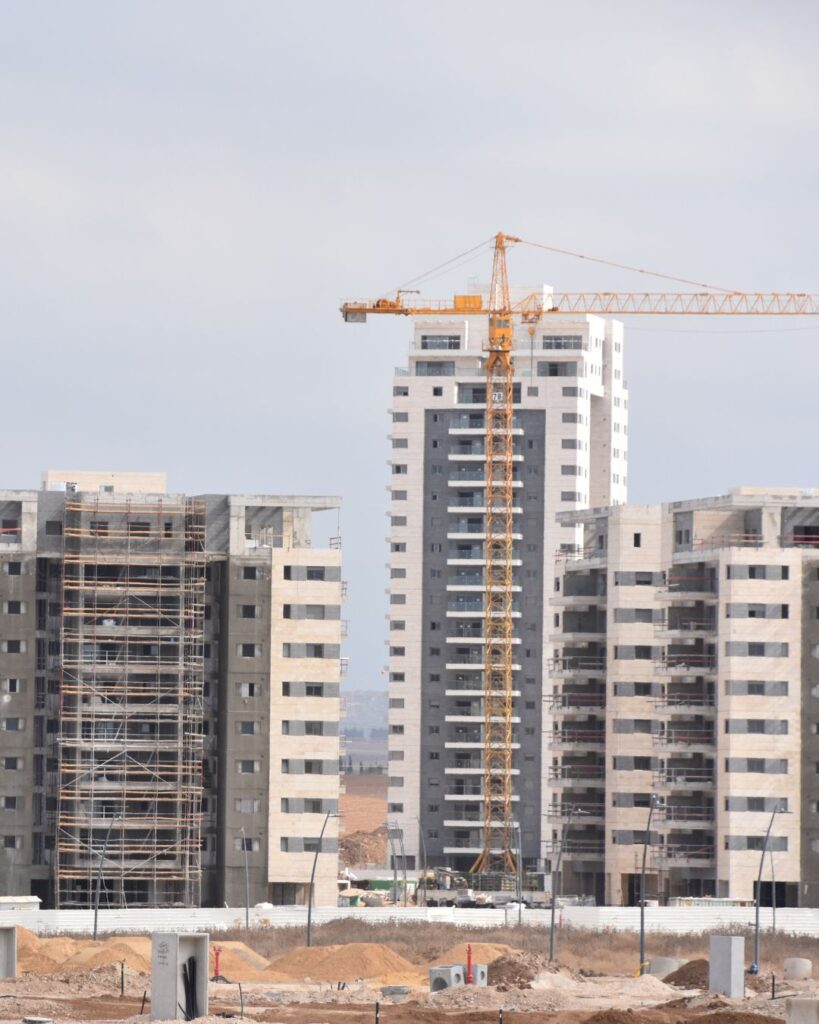
New construction contracts need to be reviewed carefully to ensure the delay and penalty provisions are structured in a way that gives buyers meaningful protection, not just nominal language that sounds protective but is effectively unenforceable.
Specification and Finish Quality
What is promised in the marketing materials and what is legally committed to in the contract are not always the same thing. This is a subtle but important distinction that catches many buyers off guard.
Developers present impressive showrooms and glossy brochures. The contract, however, is the legal document. If the kitchen finishes, flooring materials, or fixture specifications are not written into the contract with sufficient precision, the buyer has limited legal grounds if the developer substitutes lower-quality alternatives.
Specification annexes need to be reviewed carefully, and any items that are material to the buyer’s decision should be explicitly referenced in the binding contract, not just in promotional materials.
Common Property and Building Completion
In a multi-unit development, buyers also need to understand what happens with the common areas. The building’s shared infrastructure, parking, lobby, and external areas all need to be completed and handed over properly. If the developer retains ownership of certain common elements or structures the transaction in a way that disadvantages buyers’ rights in the building, this needs to be identified and addressed before signing.
Special Considerations for Olim and English-Speaking Buyers
For buyers who are new to Israel, whether recently arrived olim or English-speaking expats purchasing property for the first time, there are additional layers to be aware of.
The bureaucratic language of Israeli real estate, including the Tabu extract, building permits, and purchase agreements, is in Hebrew. Working with a lawyer who is fluent in both languages and both legal cultures is not a luxury. It is a practical necessity.
Beyond translation, olim should understand how potential mas rechisha (purchase tax) exemptions for new immigrants interact with their specific situation, and ensure that any tax benefits they are entitled to are structured correctly from the start. Purchase tax in Israel is significant, and missing an exemption or filing incorrectly can have real financial consequences.
It is also worth noting that the Israeli legal process for property purchase differs structurally from what buyers may be accustomed to in the US, UK, or elsewhere. There is no escrow system in the American sense. The role of the attorney is broader and more central to the transaction than it may be in other jurisdictions. Understanding that framework before you begin helps avoid surprises midway through.
What Good Legal Protection Actually Looks Like
Whether you are buying second-hand or new construction, effective legal representation in an Israeli real estate transaction is not simply about reviewing documents. It is about structuring the entire process so that the key risks in that specific type of transaction are identified early and addressed properly.
For second-hand: that means a thorough pre-contract due diligence phase covering title, permits, debts, and physical compliance, before you are legally committed. It means precise sequencing of payment against the release of encumbrances. And it means making sure that any issues discovered are either resolved, priced into the deal, or grounds for you to walk away.
For new construction: that means scrutinizing the developer’s financial backing and the guarantee mechanism, reviewing the contract’s delivery, penalty, and specification provisions carefully, and ensuring that the rights being purchased are clearly defined and legally protected before any money changes hands.
In both cases, the goal is the same: ensuring that what you believe you are buying is what you actually receive, legally and physically.
Due Diligence Timing
One of the most consistent patterns in Israeli real estate is buyers who engage a lawyer after they have already fallen in love with a property and mentally committed to the purchase. Emotionally, that is understandable. Legally, it creates pressure to overlook problems that a cooler, earlier review might have flagged.
The right time to engage a lawyer in an Israeli real estate transaction is before you make an offer, or at the very latest, before you sign any preliminary agreement. In Israel, even an informal written agreement or a zikaron devarim (memorandum of understanding) can have binding legal implications. Once you have signed something, your room to renegotiate or exit is more limited.
Starting the process with legal guidance rather than adding it in after the fact is one of the simplest and most effective things a buyer can do.
Second-hand and new construction in Israel are not two versions of the same transaction with different aesthetics. They carry genuinely different legal profiles, require different due diligence approaches, and protect against different types of risk.
Second-hand demands a forensic, backward-looking review of the apartment’s history: its permits, its registered status, and its inherited financial obligations.
New construction demands a forward-looking contractual framework: protections against developer insolvency, delivery delays, specification shortfalls, and incomplete handover of building rights.
Neither is inherently the safer choice. Both are navigable with the right legal preparation.
If you are considering a property purchase in Israel and want to understand what the process looks like for your specific situation, contact Dvoranit Schwartz for a free consultation.
Disclaimer: This article is intended for general informational purposes only and does not constitute legal advice. Israeli real estate transactions are complex and fact-specific, and the information provided here may not account for all circumstances, recent legal developments, or details relevant to your individual situation. Every transaction carries its own unique considerations that may not be addressed in a general overview of this kind. Before making any decisions regarding the purchase or sale of property in Israel, you should consult with a licensed Israeli real estate attorney who can review the specifics of your case. Reading this article does not create an attorney-client relationship.