Buying or selling property in Israel is rarely as simple as one buyer, one seller, and a handshake. Behind many Israeli real estate transactions sits a question that catches English-speaking buyers and sellers off guard: who actually owns this property, and does everyone who owns it agree to the deal? When a home is held by more than one person, or when an owner has passed away, the answer becomes more complicated than most people expect. Understanding how shared ownership and inheritance work under Israeli real estate law can save families months of delay, thousands of shekels, and a great deal of stress.
It’s essential to understand why every co-owner has to be on board before a property can change hands, what happens to a home when an owner dies, and why having a will in place matters far more than most people realize.
Shared Ownership Means Shared Decisions
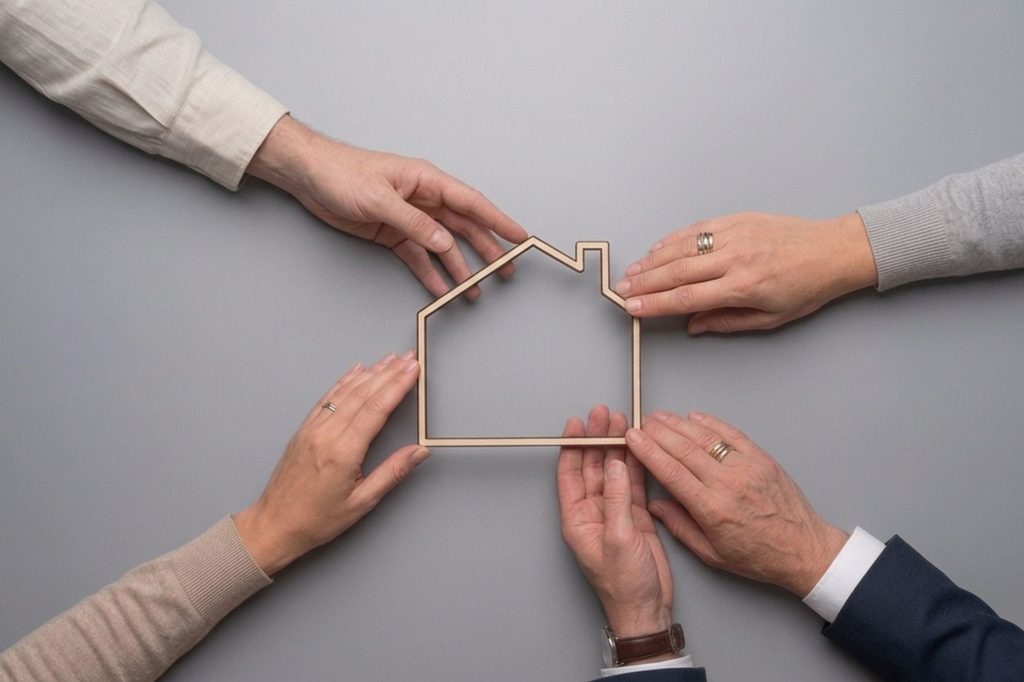
In Israel, property is often held by more than one owner. A married couple typically holds their home jointly. Siblings sometimes inherit a family apartment together. Business partners buy investment units as co-owners. Parents buy an apartment together with an adult child. In each of these cases, the property is registered in the names of several people, and each of them holds a defined share.
The core principle is straightforward. To sell a jointly owned property in Israel, all of the registered owners have to agree and sign. One owner cannot sell the whole property on their own. A husband cannot sell the family apartment without his wife’s signature. One sibling cannot sell an inherited property over the objection of the others. Each co-owner controls their own share, and no sale of the entire property can close unless everyone signs the sale contract and the transfer documents.
This becomes a real problem when the co-owners do not see eye to eye. Maybe one sibling wants to sell and cash out while another wants to keep the apartment in the family. Maybe two of the four heirs live abroad and are slow to respond. Maybe there is an old family disagreement that has nothing to do with the property but suddenly controls its future. When co-owners cannot reach agreement, a deal that appears simple on paper can stall for months.
Israeli law does provide a pressure valve. A co-owner who “wants out” can file for what is called pirok shituf, meaning dissolution of joint ownership, in court. In many cases the court will order the property sold, sometimes by public auction, and the proceeds divided among the owners according to their shares. This is a real remedy, but it is slow, it is public, and it usually produces a lower price than a normal sale on the open market. It is a last resort, not a plan. The far better path is to sort out ownership and consent before a property is ever listed.
What Happens to a Property When an Owner Passes Away
Everything above assumes the owners are alive and able to sign. Death changes the picture entirely. When a property owner passes away, their share does not simply vanish or automatically move to the person you might expect. It becomes part of their estate, and the estate has to be legally settled before anyone can sell the property.
Settling an estate in Israel means obtaining an official order that identifies the heirs and confirms who is entitled to what. There are two main kinds of orders, and which one applies depends on whether the deceased left a will.
If there is no will, the family applies for a Tzav Yerusha, an inheritance order. This order is issued according to the fixed rules of Israeli inheritance law, which decide who inherits and in what proportions regardless of what anyone might have preferred.
If there is a will, called a Tzava’ah in Hebrew, the family applies for a Tzav Kiyum Tzava’ah, an order upholding the will, which is the Israeli equivalent of a grant of probate. This order gives the will legal force so the estate can be distributed according to the wishes the deceased actually wrote down.
Both orders are handled by the Registrar of Inheritance Affairs, the Rasham L’Inyanei Yerusha, or in certain cases by the Family Court. Neither order is instant. Even a straightforward application takes several weeks, and if a relative objects or paperwork is missing, it can stretch into months. Until that order is in hand, the deceased owner’s share sits frozen. The property cannot be sold, because on paper part of it still belongs to someone who is no longer here to sign.
The No-Will Scenario: Why the Surviving Spouse Is Not Automatically the Sole Owner
This is the point that surprises clients more than any other.
Many people assume that when one spouse dies, the surviving spouse simply owns everything, especially the family home. Under Israeli inheritance law, that is not what happens when there is no will and the couple has children.
Israel’s Succession Law sets out a default division of the estate. When someone dies without a will and leaves behind a spouse and children, the surviving spouse does not inherit the entire estate. The spouse first receives the household belongings and a vehicle, and then inherits half of the remaining estate. The children inherit the other half, divided equally among them.
Here is what that means in practice for a family home. Imagine a husband and wife who own their apartment together equally, and the husband passes away without a will. His fifty percent is what enters his estate. His widow inherits half of that share, which is twenty-five percent of the apartment, and she keeps her own original fifty percent. So she now owns seventy-five percent of the home. The remaining twenty-five percent passes to their children, split among them.
The widow is now a co-owner alongside her own children. If she later wants to sell the apartment, perhaps to move somewhere smaller, or to be closer to family, or simply because she needs the money, she cannot sell it on her own. Every child who inherited a share has to agree and sign. That is true even if the children are fully grown, living abroad, and have no involvement in the property at all. It is even more complicated if any of the children are minors, which we will come back to shortly.
Now change the facts slightly. Suppose the apartment was registered only in the husband’s name, not jointly. In that case his entire one hundred percent enters the estate. The widow inherits half, so she owns fifty percent of the home she has lived in for decades, and the children own the other fifty percent between them. She is now, at best, an equal partner with her own children in the roof over her head.
None of this is anyone’s fault. It is simply how the law distributes an estate when there are no written instructions to say otherwise. And it is precisely the kind of outcome a well-drafted will is designed to prevent.
How a Will Changes the Picture
A will lets a person decide for themselves who inherits their property, instead of leaving it to the default rules. For couples in particular, this is powerful. A spouse can direct that their share of the family home passes entirely to the surviving spouse, so that the survivor becomes the sole owner and can sell, refinance, or stay put without needing anyone else’s signature. The children can be provided for in other ways, or can inherit only after both parents are gone.
A will does not remove the process entirely. Even with a valid will, the family still needs to obtain the order upholding the will before the estate can be distributed and the property sold. What a will does is control the outcome, so that the property ends up in the right hands and a future sale does not depend on the cooperation of people who were never meant to be co-owners in the first place.
Israeli law recognizes several types of wills, including a will signed before two witnesses, a will handwritten and signed by the testator, and a will made before an authority such as a notary or a judge. A witnessed will is the most common. What matters is that the will is valid, clear, and actually locatable when the time comes. A will that no one can find helps no one.
Common Complications That Slow or Freeze a Sale
Beyond the basic question of who inherits, several recurring situations make inherited and jointly owned property harder to sell. English-speaking families run into these more often than most, simply because their relatives are frequently spread across different countries.
Minor children as heirs
When some of the heirs are minors, an extra layer of protection kicks in. Parents are the natural guardians of their children, but a guardian cannot sell a minor’s share of real estate on their own. Selling property that a minor has inherited requires approval from the Family Court, which reviews the transaction to confirm it serves the child’s interests. This is an important safeguard, and it is also a step that takes time and documentation. A sale that involves a minor’s inherited share cannot close until the court signs off.
Heirs who live abroad
Many Israeli properties are owned by families whose members are scattered across the United States, the United Kingdom, Canada, and beyond. When an heir lives overseas, they usually cannot pop into an office in Jerusalem or Tel Aviv to sign. Instead they sign through a power of attorney, and their identity and signature often need to be verified by a notary and confirmed with an apostille, an international certification that Israeli authorities will accept. Coordinating this across time zones, languages, and different legal systems is entirely doable, but it needs to be started early. Leaving it to the last minute is one of the most common reasons a closing date slips.
Heirs who disagree
An inheritance can turn several relatives into co-owners of a single apartment overnight, whether or not they get along. If even one heir refuses to sell, or holds out for a higher price, or simply goes silent, the sale of the whole property is blocked. As mentioned earlier, an heir who wants to move forward can ask the court to dissolve the joint ownership, but that is a lengthy and often costly route. Clear communication among the heirs, ideally with legal guidance from the start, prevents most of these standoffs before they harden.
Transferring Title Before You Can Sell
There is one more practical step that inherited property almost always requires. Before heirs can sell, the property usually has to be re-registered in their names based on the inheritance order or the order upholding the will.
Israeli property is registered in one of a few places, most commonly the Land Registry, known as the Tabu, and in other cases with the Israel Land Authority or a housing company that manages the registration. Whichever applies, the deceased owner’s name has to be removed and the heirs’ names added, so that the title accurately reflects who owns what. Only then can the property be transferred cleanly to a buyer.
This registration takes time and paperwork, and it is worth completing before a property is listed rather than after a buyer is already waiting. Clean, current registration is what makes a property genuinely sellable.
A Word on Taxes
There is good news on one front. Israel does not currently impose an inheritance tax or estate tax. Simply inheriting a property does not trigger a tax bill at the moment of inheritance.
That does not mean taxes are irrelevant. When heirs later sell an inherited property, betterment tax, known as mas shevach, may apply to the gain in value, calculated in a way that reaches back to how and when the property was originally acquired. At the same time, Israeli tax law offers a meaningful exemption in certain cases where a spouse or descendant sells an inherited residential apartment, provided specific conditions are met, including that the deceased owned only one apartment and would themselves have qualified for the exemption. Whether that exemption applies depends on the details, and the numbers can be significant, so this is an area where getting the analysis right before signing is well worth the effort.
Practical Steps to Keep a Deal on Track
A few steps make an enormous difference for anyone who owns, expects to inherit, or plans to sell property in Israel.
Put a will in place, and make sure it addresses Israeli property specifically. A will drafted abroad may not map neatly onto Israeli law, and the family home is usually a family’s largest asset. Couples in particular should think carefully about whether they want the survivor to hold the home outright or to share it with the children.
Settle the estate early. If a property owner has passed away, begin the process of obtaining the inheritance order or the order upholding the will before trying to sell. Waiting until a buyer appears only creates pressure and delay.
Get every owner aligned before listing. Whether the co-owners are spouses, siblings, or heirs, confirm that everyone agrees on the plan and the price, and sort out powers of attorney for anyone abroad, before the property goes on the market.
Confirm the registration. Make sure the title at the Land Registry or the relevant authority accurately reflects the current owners, so the transfer to a buyer can proceed without surprises.
Get advice specific to the property. Every estate and every co-ownership situation has its own facts. The rules described here are the framework, but the outcome always turns on the details.
Inheritance and shared ownership do not have to derail a real estate deal in Israel. They simply require planning, clear title, and the agreement of everyone with a stake in the property. Handled early and correctly, what looks like a legal thicket becomes a manageable set of steps, and the transaction can move forward smoothly for everyone involved.
Disclaimer
This article is provided for general informational purposes only and does not constitute legal advice. It offers a general overview of how inheritance and shared ownership can affect real estate transactions in Israel, and it does not cover every rule, exception, tax consideration, or scenario that may apply to a specific situation. Israeli inheritance and real estate law is detailed and fact-dependent, and additional points that are not addressed here will often come up in the context of a personal consultation. Reading this article does not create an attorney-client relationship. Anyone dealing with an inherited or jointly owned property, drafting a will, or planning to buy or sell real estate in Israel should seek tailored legal advice based on their own circumstances before taking action.